
Table of Contents
Overview – Vascular Tumours
Vascular tumours encompass a range of benign and malignant lesions arising from blood or lymphatic vessels. These include common benign entities like haemangiomas and pyogenic granulomas, as well as rarer but clinically significant tumours like Kaposi sarcoma. This guide outlines their pathology, clinical presentation, and management — vital for pathology and clinical exams.
Haemangioma
- Definition:
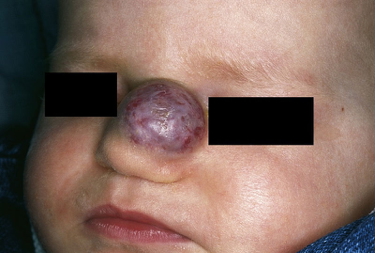
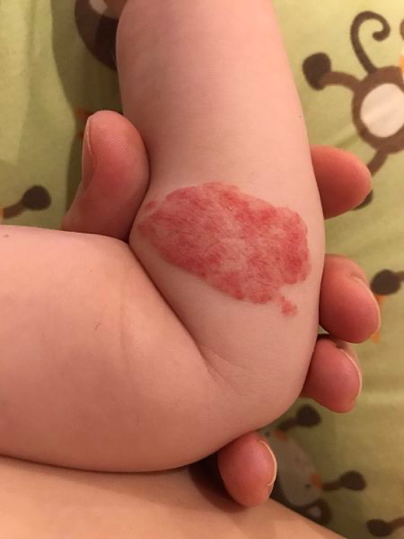
A benign vascular tumour composed of closely packed aggregates of capillaries filled with blood. - Epidemiology:
Common in infants and young children. - Types:
- Capillary haemangioma – Superficial, often in skin or mucous membranes.
- Cavernous haemangioma – Deeper, larger, can affect internal organs like liver or brain.
- Pathogenesis:
Congenital malformation of vascular tissue that proliferates after birth and usually regresses spontaneously. - Clinical Features:
- Raised, red or purplish lesion (“strawberry mark”)
- Usually non-tender
- Typically enlarges rapidly during infancy then regresses
- Management:
- Observation (most regress by age 10)
- Laser therapy or surgical removal if ulcerated, bleeding, or cosmetically concerning
Pyogenic Granuloma
- Definition:
A rapidly growing, ulcerated haemangioma-like lesion composed of capillaries, granulation tissue, and inflammatory cells. - Aetiology:
- Often follows trauma or irritation
- Sometimes associated with pregnancy (granuloma gravidarum)
- Clinical Features:
- Appears as a red, lobulated nodule
- Bleeds easily
- Most commonly found on gums, lips, or fingers
- Management:
- Surgical excision or laser ablation
- Recurrence is possible if incompletely removed
- Histological examination to exclude malignancy

Telangiectasia
- Definition:
Permanent dilation of small blood vessels (capillaries, arterioles, venules) leading to spider-like red lesions. - Pathogenesis:
Often congenital or associated with connective tissue disease. - Clinical Features:
- Blanching red lesions (“spider angiomas”)
- Common on face, lips, and extremities
- Associations:
- Hereditary haemorrhagic telangiectasia (Osler-Weber-Rendu syndrome)
- Rosacea, systemic sclerosis
- Management:
- Cosmetic laser treatment
- Monitor for bleeding or systemic involvement

Lymphangioma
- Definition:
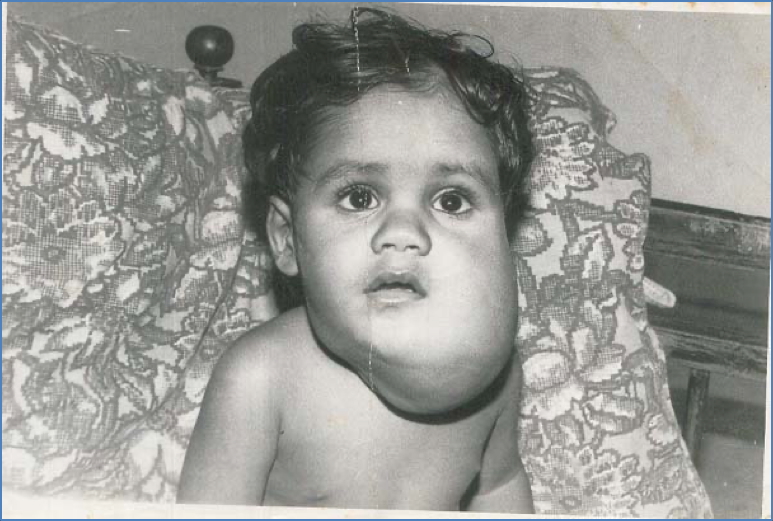
A benign lymphatic tumour composed of dilated lymphatic channels. - Types:
- Simple (capillary) – Superficial
- Cavernous (cystic hygroma) – Deep, large lesions, often in neck/axilla
- Epidemiology:
Congenital, present at birth or early childhood - Clinical Features:
- Soft, compressible, painless swelling
- Often translucent and non-tender
- Complications:
- Can become infected or compress nearby structures
- Management:
- Surgical excision
- Sclerotherapy (injection of irritant to shrink lesion)
Kaposi Sarcoma (KS)
- Definition:
A malignant vascular tumour caused by HHV-8 (Human Herpesvirus 8), often seen in immunocompromised patients. - Types:
- Classic KS – Elderly men of Mediterranean descent
- Endemic KS – African children and young adults
- Iatrogenic KS – Organ transplant recipients
- AIDS-associated KS – Most aggressive, common in HIV patients
- Pathogenesis:
HHV-8 triggers angiogenesis and cellular proliferation in endothelial cells. - Clinical Features:
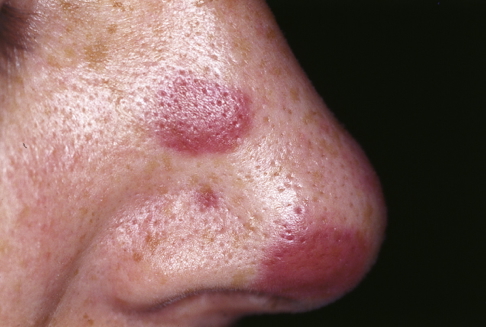
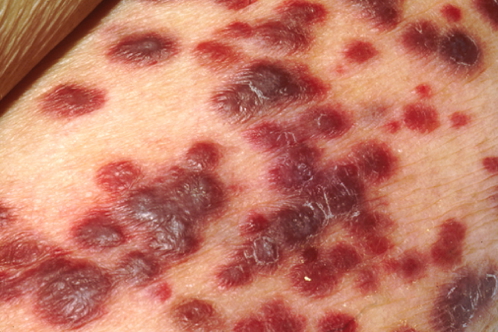
- Reddish-purple macules, plaques or nodules
- Commonly on lower extremities, oral mucosa, genitals
- Can affect internal organs (GI tract, lungs)
- Management:
- HAART (HIV control) for AIDS-associated KS
- Local excision or radiotherapy for limited disease
- Chemotherapy for advanced disease

Summary – Vascular Tumours
Vascular tumours range from benign malformations like haemangiomas and lymphangiomas to aggressive malignancies like Kaposi sarcoma. Clinical identification, anatomical patterns, and management strategies vary, with some lesions requiring surgical or pharmacological intervention. Mastering this topic is essential for pathology and dermatology assessments.
Want to revise more vascular pathology topics? Browse our Cardiovascular Overview for more.